YARD & GRAIN Plan your space
Menu Close menu

Landscaping. Hardscaping. Ongoing care.

MAKE ROOM
FOR OUTSIDE.

Useful lawns. Planted edges. Places to gather. Bring the living and built parts of your outdoor space into the same conversation.

For the spaces around homes and business properties.

Plan your space
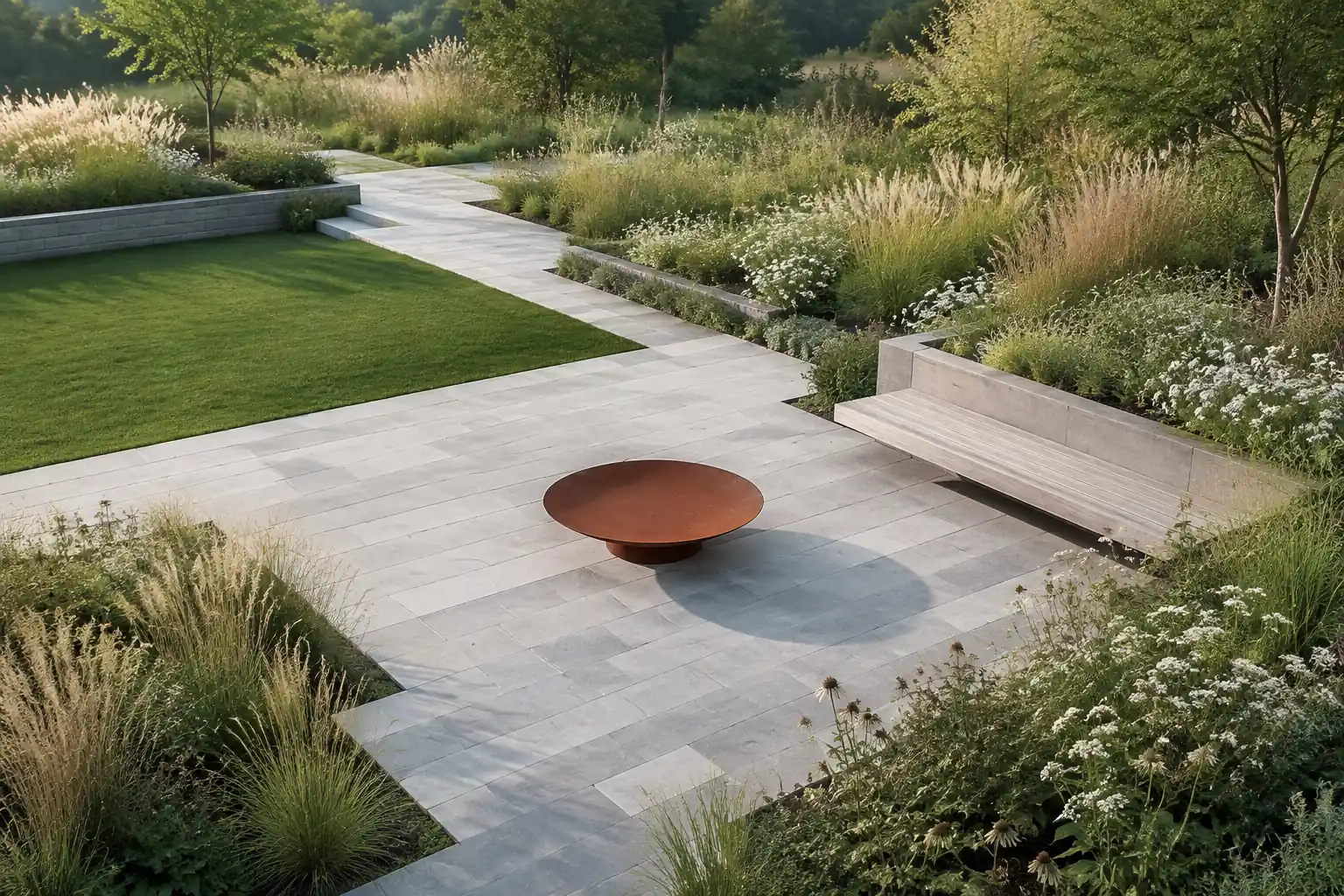
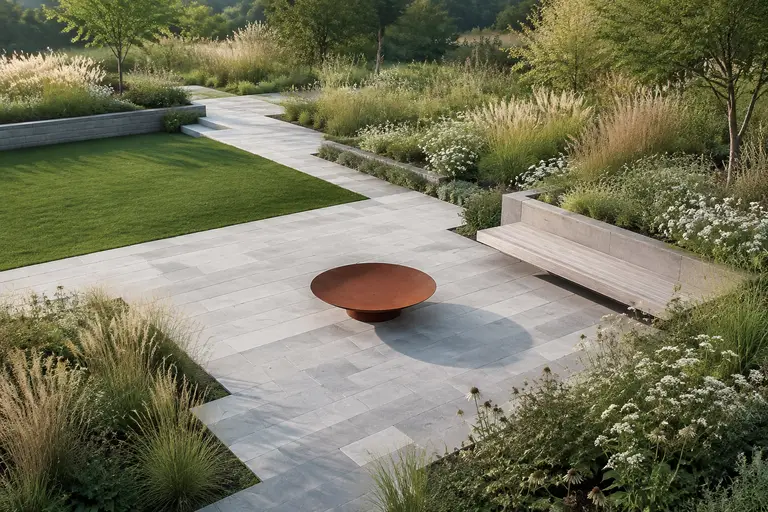
AI-generated garden study with a paved terrace, unlit fire bowl, bench, lawn and layered planting; not completed work.
Illustrative garden study · AI-generated, not completed work
Start with the space you have.Explore the services

01 — What belongs outside

A WHOLE-SPACE
WAY OF THINKING.

A property is rarely just a lawn or just a patio. Daily care and larger projects meet at every edge. Explore the two sides below, then start with what matters to your space.

LANDSCAPING& CARE

For the living parts of your property. Start with the condition of the lawn and planting, then consider the upkeep that fits how the space is used.

Lawn maintenance

Keep the everyday use of a lawn in view: mowing access, edges, clippings and the areas that need attention. Discuss the current condition and whether you need ongoing care or help with a specific job.

Aeration & thatching

Compacted ground and a build-up of organic material call for a closer look before choosing a treatment. An assessment should establish what is present, whether intervention is appropriate and how the lawn would be cared for afterward.

Trimming & edging

Define the meeting points between lawn, planting and paths. Talk through which plants need attention, their growing habits and the clearances needed around entrances and walkways.

New lawn installation

A new lawn starts with the ground beneath it. Soil condition, levels, light, drainage and the way the area will be used all belong in the scope, along with establishment and ongoing care.

Power washing

Identify the surface, its condition and the surrounding planting before deciding how to clean it. Material suitability, water access and runoff need attention; the same method does not suit every surface.
HARDSCAPING& PROJECTS

For the places you move through and settle into. Consider routes, levels and daily use together, before narrowing the materials and construction scope.

Paver patios

Make room for how you want to sit, eat or gather. Furniture layout, circulation, sun and existing doors help establish the footprint; paving, joints, base preparation and drainage need to work together.

Retaining walls

A change in level needs more than a choice of facing material. Ground conditions, loads, water and the relationship to nearby structures may call for specialist design and permissions before a wall is scoped.

Driveways

Consider turning, parking and the route to an entrance, as well as the finished surface. Vehicle use, existing levels, drainage and base requirements shape the options that are appropriate for the site.

Fire pits

Begin with a gathering layout and the space around it. Fuel type, clearances, nearby planting and structures, local requirements and ongoing use must be assessed before choosing a location or product.

Walkways

Connect the places people already move between. Width, changes in level, surface texture and wet-weather use matter alongside the line a path takes through the garden.

02 — The Yard & Grain idea

THE YARD IS
PART OF
EVERYDAY LIFE.

Not just something to look at.
Somewhere to move, pause and spend time.

Good outdoor decisions begin with ordinary moments.

The route from a door to a driveway. The edge you mow around. The place a chair catches the afternoon light. Yard & Grain’s point of view connects these small moments to the way a whole property is planned and cared for.

That means considering the landscape and the hardscape together. A planted border needs room to grow. A gathering space needs a practical route in. A new surface needs thought about the ground, water and upkeep around it.

USE BEFORE ORNAMENT

Begin with how people use the space.

GROUND BEFORE SURFACE

Understand what is underneath and around it.

CARE BEYOND INSTALLATION

Think about the work of living with it.

03 — The field notes

DIFFERENT SPACES.
DIFFERENT STARTING POINTS.

Explore the relationships between planting, surfaces and daily use. These original visual studies are ideas to discuss, not a catalogue of completed projects.

Illustrative terrace with a circular fire bowl and surrounding planting, showing a possible gathering layout.
FIELD NOTE 01

A place to come together.

Think beyond the seating footprint. Leave the movement around it in the conversation, along with planting, clearances and the route from the rest of the property.

AI-generated gathering study · Not completed work
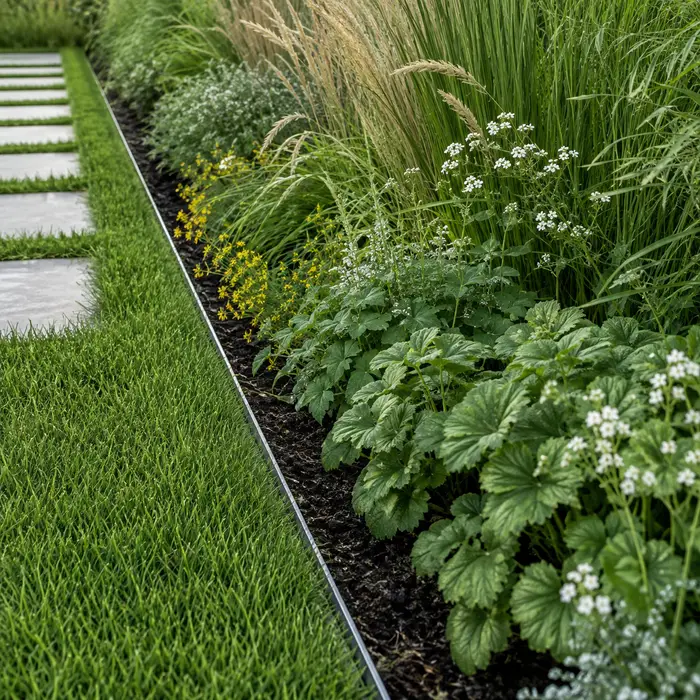
AI-generated close study of steel edging between a lawn and grasses with white and yellow flowers; not a maintained property.
FIELD NOTE 02

The meeting of two edges.

A crisp boundary is a visual choice and a maintenance detail. Consider the growing space, mowing access and how the edge will be kept.

AI-generated planting study · Not client work
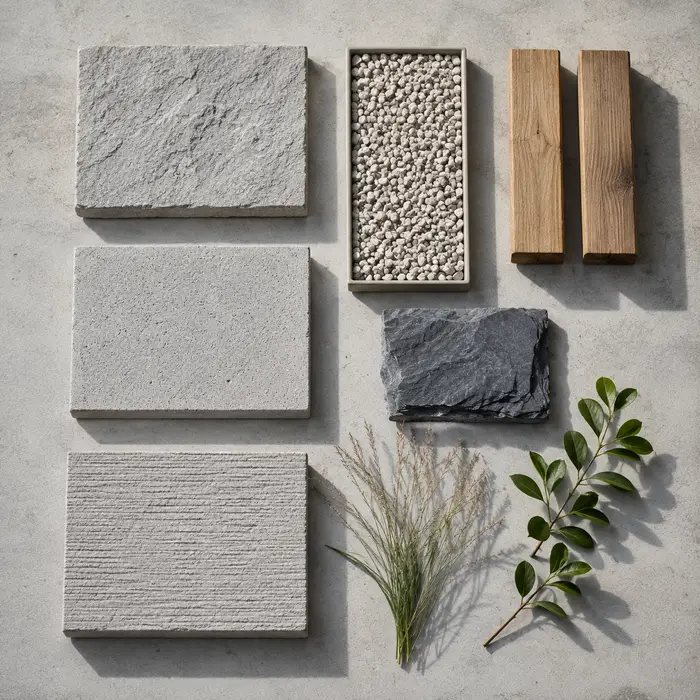
AI-generated overhead material study with gray paving samples, a gravel tray, timber, slate and plant sprigs; not a supplier selection.
FIELD NOTE 03

Start with the material in mind.

Texture, joints and color change how a surface feels. A sample starts a discussion; it does not establish suitability for a particular site.

AI-generated material study · Illustrative samples
A WAY TO LOOK AT THE WHOLEGROWGATHERCARE

Connect the pieces.

Sketch the areas you use, the routes between them and the things you want to keep. It is a useful starting point before drawing a new layout.

Concept diagram · Not a construction plan

04 — Before choosing a finish

LOOK A LITTLE
BELOW THE SURFACE.

The visible finish is one part of the decision. These four conversations help connect an idea to the conditions it would need to work within.

Surface

Consider the activity, texture, joint treatment and maintenance alongside color. A garden path and a vehicle area put different demands on a surface.

Ask: What will use this area?

Drainage

Look at where water goes now and how a change may affect it. Walls, new paving and altered ground levels need site-specific assessment.

Ask: What changes around it?

Planting

Available light, soil, mature plant size and care expectations matter. A planting image cannot confirm a species is suited to an unknown site.

Ask: How will this grow?

Access

Consider entrances, equipment routes and the needs of people using the property. Construction access and routine upkeep both need space.

Ask: How will people move?

05 — A conversation with a direction

FROM A ROUGH IDEA
TO A CLEAR SCOPE.

A useful planning conversation makes room for questions before decisions. This is the outline; actual delivery details would be confirmed before work is arranged.

  1. 01

    Find the starting point.

    Tell the story of the space: how it is used, what gets in the way and what you would like to keep. Separate the must-haves from ideas you are still exploring.

    Bring: priorities, rough dimensions and any existing plans.
  2. 02

    Read the site.

    Look at levels, drainage, access, existing planting and connections to buildings. Identify unknowns that need measurement, specialist advice or a permissions check.

    Resolve: what the ground and the property allow.
  3. 03

    Shape the scope.

    Compare materials and layouts against use and upkeep. Put the intended work, preparation, exclusions and care needs into a written scope before discussing an agreement.

    Consider: options, tradeoffs and what can wait.
  4. 04

    Agree the next steps.

    Confirm the actual service scope, responsibilities, price and timing. Any installation or care arrangement should include access planning and clear guidance for looking after the finished space.

    Confirm: the details before work is arranged.

06 — Questions worth asking

LET’S CLEAR
A FEW THINGS UP.

Before materials, measurements or a plan, there is usually a question. Start here.

Do I need landscaping, hardscaping, or both?

Landscaping and care focus on the lawn, planting and upkeep. Hardscaping concerns built elements such as paving, walls and routes. If a new patio changes the lawn edge or a path affects planting, the two should be discussed together. You can choose “A bit of both” in the planner without deciding the final scope.

Is this only for residential gardens?

The service ideas cover homes and business properties. A household may prioritize gathering space; a business property may need to consider visitor routes, parking, access and maintenance around its operating hours. Actual service coverage and suitability would need confirmation for the property.

What if I only have a rough idea?

Start with a problem or a use: a difficult lawn edge, a route that feels awkward, or nowhere to sit. A rough sketch and a list of what you want to keep can be more useful than a finished design. Materials and exact dimensions can be explored as the scope becomes clearer.

How should I choose paving and planting?

Look beyond a photograph. Paving needs to suit its use, site conditions and care requirements. Planting needs to suit the growing conditions, available space and maintenance expectations. Samples and planting ideas are starting points for discussion, not confirmation that a particular choice will work on your site.

What about drainage, walls and permits?

Existing water movement, level changes and nearby structures need to be understood before work is planned. Some projects may require specialist assessment, design or permissions. Requirements are site-specific; a website cannot establish which ones apply to your property.

What determines the price and timing?

The size and condition of the area, site access, preparation, materials, disposal and any specialist input can all affect the scope. Prices, availability and timing are not published here. They would need to be confirmed against an agreed plan, rather than assumed from an image or a service name.

Does the planner send an estimate request?

No. It lets you explore the questions an estimate conversation could cover. It does not collect personal information, save your selections or send a message. No request, appointment or estimate is created.

Before you choose a provider

BEFORE ANYONE
STARTS WORK.

Use these questions when comparing any provider. A clear written agreement starts with knowing what to confirm.

07 — Your starting point

WHAT DO YOU HAVE
IN MIND?

A new project, some ongoing care, or a little of both. Choose a direction and preview the questions that would help shape a conversation.

Choose your starting point
Preview the conversation

Your care conversation

Start with what needs attention.

  • Which lawn or planted areas need care, and what is their current condition?
  • Is this ongoing upkeep, a new lawn, or a single task?
  • What access, existing features and care expectations should be considered?

Your project conversation

Start with how you want to use it.

  • Is the priority a place to gather, a route, parking, or a change in level?
  • What is there now, and what would you like to keep?
  • Which dimensions, drainage, access, materials or permissions need assessment?

Your whole-space conversation

Start with the connections.

  • How should the planted and paved areas work together?
  • Which changes matter first, and which could wait?
  • What needs to be understood about access, ground conditions and ongoing care?

This is a simulation. Nothing is saved or sent. No request, appointment or estimate was created. Contact and booking are not available in this preview.

No personal information is collected. Actual service area, scope, licensing, insurance, permissions, price and timing would need confirmation before proceeding.